
Vascular laser
Red veins around your nose, on your cheeks or small bluish-red veins on your legs: visible blood vessels are very common. They are usually harmless, but you often would rather be rid of them. With the vascular laser, we treat visible blood vessels and leg veins very precisely, while the surrounding skin remains intact. At Huidkliniek Parkstad in Simpelveld, a registered skin therapist first assesses which type of vein you have and whether laser treatment is the best choice.
- LaserMeDioStar, 940 nm
- ComfortIntegrated cooling
- TreatmentsOften two to three
What is the vascular laser?
For vascular treatments, Huidkliniek Parkstad works with the medically certified MeDioStar diode laser. This laser works at a wavelength of 940 nm and has been developed to target blood vessels very precisely. The laser light is absorbed by the red pigment in the blood. This heats up the vessel and causes it to close. The surrounding skin remains intact, and the integrated cooling makes the treatment more comfortable. In the weeks that follow, your body clears away the treated vessel by itself.
Removing blood vessels on the face
Visible blood vessels on the face are often found around the nose, on the cheeks or on the chin. These are small, dilated vessels that show up as red lines or a red star (spider naevus). With the vascular laser, we treat such individual, clearly visible vessels very precisely. Do you mainly have a red haze over a larger area, as with couperose or rosacea? Then IPL may be a better fit. Sometimes we combine both in one skin plan
Removing leg veins
Leg veins are small, superficial veins on the legs. You may know them as spider veins, thread veins or “small varicose veins”. They are red, blue or purple and run across the skin as thin lines or in a fan shape.
We can treat certain superficial leg veins well with the vascular laser. We cannot treat larger, bulging varicose veins: these are caused by a problem in deeper veins and should be seen by a vascular specialist or vein clinic. During the consultation, we look at which type of leg vein you have and whether laser treatment makes sense.
Leg veins often require several treatments. The treated vein may first become darker before it fades. See below the result of a client after two treatments.
How do visible blood vessels develop?
Visible veins usually develop through a combination of factors:
- predisposition and heredity
- hormonal changes, for example during pregnancy
- sun damage and ageing of the skin
- a lot of standing or sitting (especially with leg veins)
- large temperature changes, alcohol or rosacea (especially on the face)
Because predisposition plays a major role, new veins may develop over time after the treatment.
Who is the vascular laser suitable for?
The vascular laser is suitable for men and women with small, visible blood vessels that they would like to make less visible. We treat, among other things:
- red veins around the nose and on the cheeks
- small red veins elsewhere on the face
- spider naevi (red stars)
- small red vascular spots and small angiomas
- certain superficial leg veins, spider veins and thread veins
- certain port-wine stains
- venous lake (a bluish-purple bump, often on the lip)
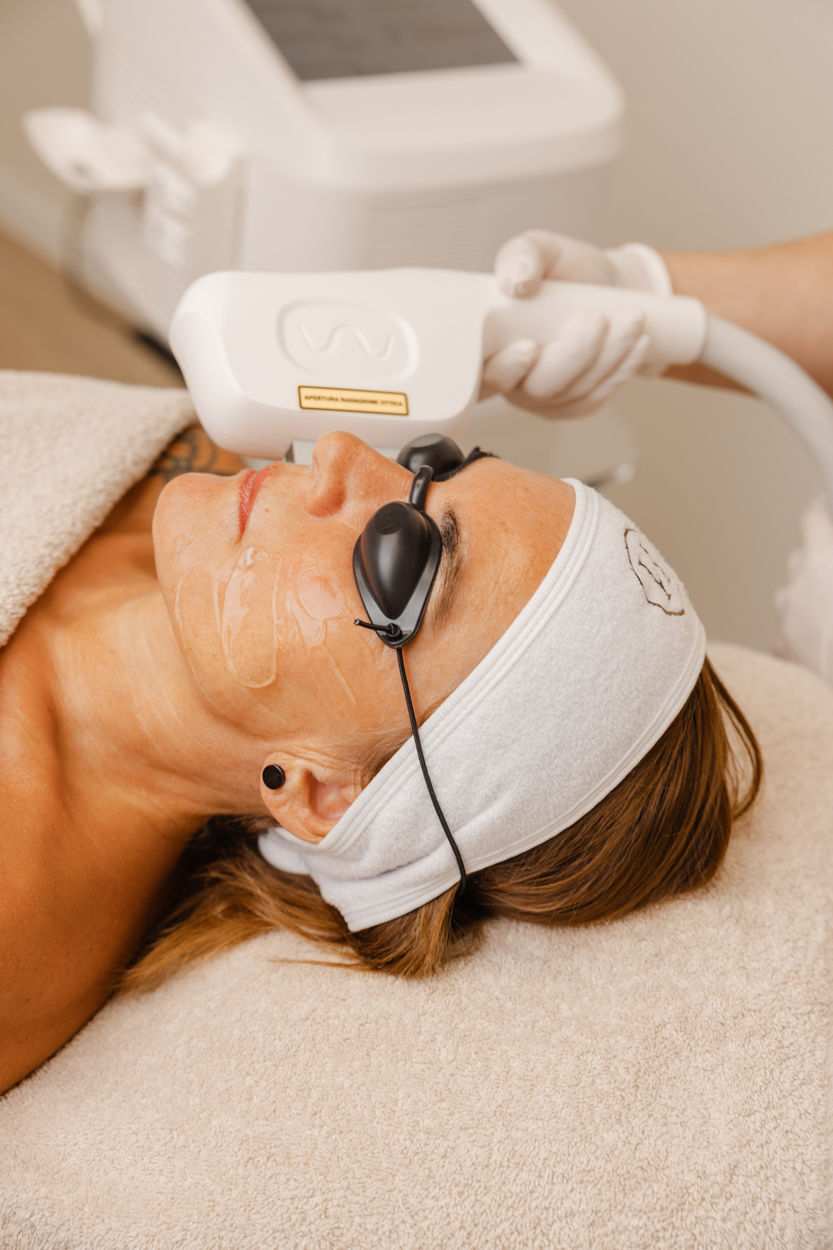
How does the treatment work?
1. Beforehand
Beforehand, we assess the type of vein and your skin.
2. IPL or vascular laser
The colour, thickness, depth and location of the vein determine whether our vascular laser is suitable and which approach fits best. When diffuse redness, couperose and pigmentation are present at the same time, IPL can sometimes be a better choice. Sometimes we use both techniques within the same skin plan.
3. After the laser: aftercare
- Immediately after the treatment, your skin may be red, warm or slightly swollen. This usually subsides within a few hours to days.
- The treated vein may temporarily look darker. Small scabs or bruises may appear on the legs.
- Protect the treated skin well from the sun with a high factor (SPF 50) [number of weeks before and after: to check].
- For the first [24–48 hours], avoid hot showers, saunas and intensive exercise.
- Do not scratch or pick at scabs.
You will always receive personal aftercare advice after the treatment.
Client results
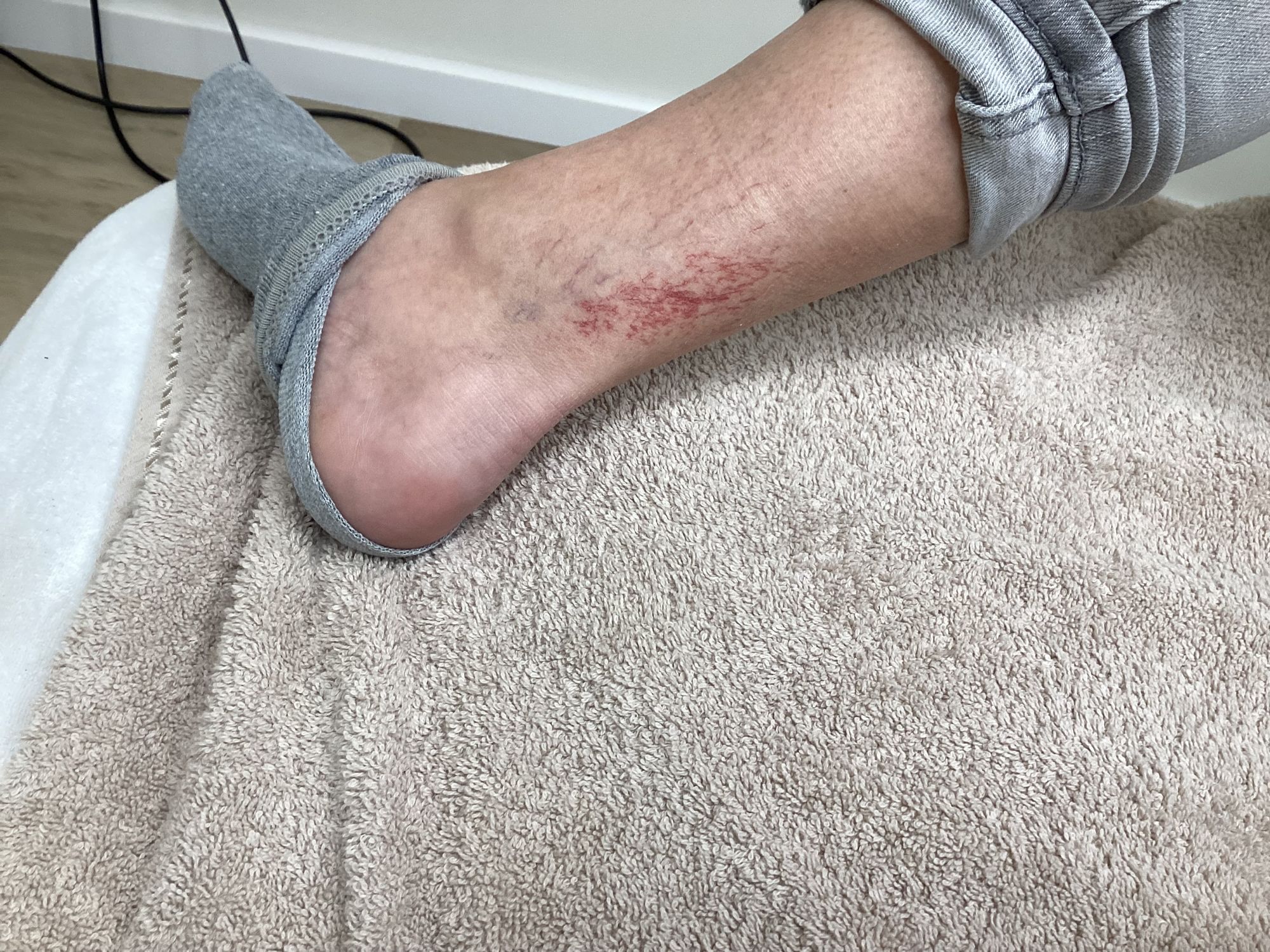 Before
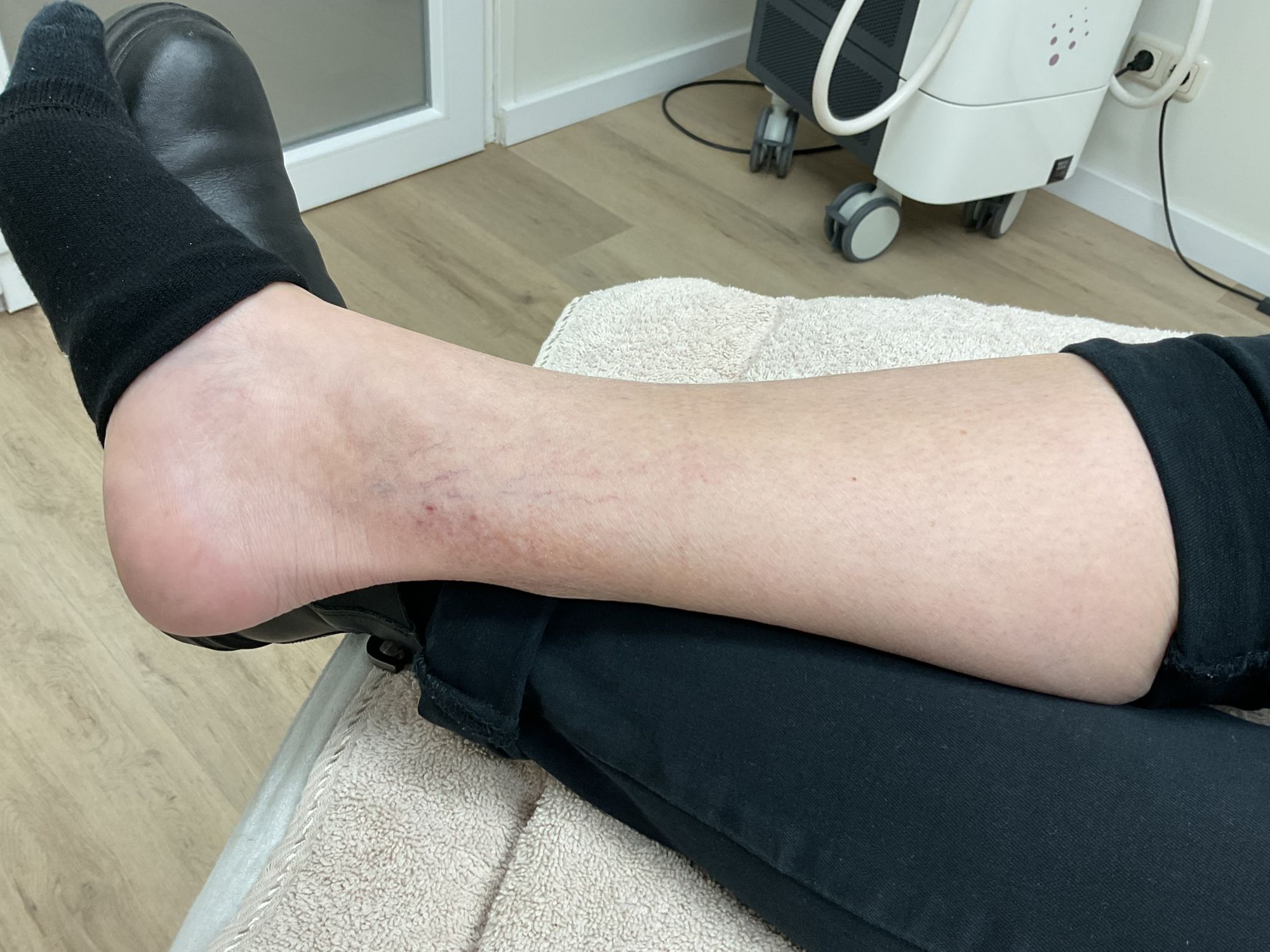 After
Frequently asked questions about the vascular laser
The colour, thickness, depth and location of the vein determine whether our vascular laser is suitable. We assess this first during the consultation.
Yes, we can often treat visible blood vessels around the nose, on the cheeks and on the chin well with the vascular laser. Spider naevi (red stars) and small red vascular spots are also eligible. During the consultation, we assess whether the vascular laser or IPL is the better fit.
We can treat certain superficial leg veins, such as spider veins and thread veins, with the vascular laser. How many treatments are needed depends on the thickness, colour and depth of the vein. The before/after photo shows the result after two treatments.
Most people feel a short, warm sting, comparable to the snap of a rubber band. Thanks to the integrated cooling, the treatment is very manageable. Anaesthesia is usually not necessary.
We usually schedule the treatments [4 to 6 weeks – to check] apart. This gives your body time to clear away the treated vein, and lets us see clearly what else is needed.
Do you mainly have diffuse redness or couperose over a larger area, plus pigmentation or sun damage, for example? Then IPL may be a better fit. Do you instead have a clearly visible, individual vein that we want to treat very precisely? Then our MeDioStar vascular laser may be more suitable. Sometimes we use both techniques within the same skin plan.
That varies greatly per vein. A small red vein next to the nose is different from several leg veins. That is why we don’t promise as standard that a vein will be completely gone after one treatment.
Small veins on the face can fade soon after the treatment. With leg veins, it often takes a few weeks, because the body gradually breaks down the vein. You will see the final result after the last treatment.
The vascular laser works with a single wavelength (940 nm) and targets individual, clearly visible veins very precisely. IPL works with broad-spectrum light and is more suitable for diffuse redness, couperose and pigmentation over a larger area. Sometimes we use both in the same skin plan.
A vein that has been treated properly usually does not come back. However, new veins may develop over time due to predisposition, sun or hormones. A maintenance treatment is then possible.
Immediately after the treatment, your skin may be red, warm or slightly swollen. The treated vein may temporarily look more prominent or darker. After that, your body is given time to clear away the treated vein further.
Curious about what is possible for your skin?
Start with an intake. Then we can see what your skin needs and whether the vascular laser is the right answer.