
Tired eyes
“You look tired.” A remark that can be frustrating when you don’t feel tired at all. The skin around the eyes is thin, and changes can become visible here relatively quickly.
Our approach to tired eyes
Fine lines, less firm skin or changes under the eyes can make your expression look more tired.
That is why at Huidkliniek Parkstad we first look at what is causing the tired appearance. Only then do we decide which form of skin improvement is appropriate.
What are tired eyes?
‘Tired eyes’ is not a specific skin condition, but a description of an appearance.
The look can be related, for example, to changes in skin quality, fine lines or skin laxity around the eyes.
It is important to make this distinction, because not every tired look has the same cause and therefore does not require the same treatment.
Frequently asked questions about tired eyes
A tired appearance is not necessarily caused only by a lack of sleep. The structure and firmness of the skin around the eyes can also play a part.
No. Eye bags can be part of a tired appearance, but they are not the same thing.
Skin-improving treatments can be used to support the quality and structure of the skin around the eyes. Which treatment is suitable depends on your skin’s condition.
There are non-surgical treatments aimed at skin quality and skin firming. The options depend on the extent and cause of the change.
Because fine lines, skin laxity and eye bags, for example, can have different causes and treatment indications.
More about causes, types and recognition
Causes of a tired appearance
A tired appearance around the eyes can have various causes. In a skin improvement programme, we mainly look at factors in and around the skin that we can actually influence.
These can include changes in skin structure, firmness and visible lines.
Different forms
A tired look can go hand in hand with fine lines, crow’s feet, less firm skin, skin laxity, eye bags and a change in skin structure around the eyes.
How do you recognise tired eyes?
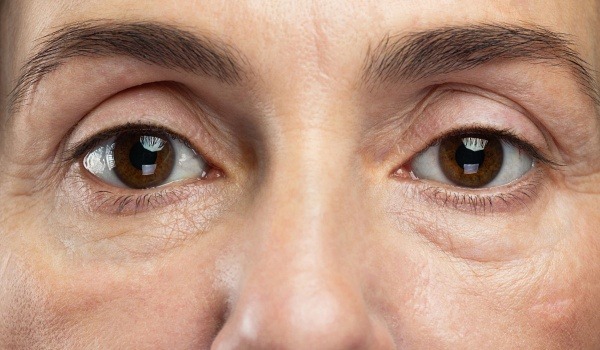
The eyes may look less open or fresh, and the skin around the eye may appear thinner, less firm or more creased.
However, what someone experiences as ‘tired’ can be a combination of different characteristics.
Eye bags and puffy eyelids
Bags under the eyes are slight swellings and mainly occur as you get older. This is because the fat under the eye is held in place by connective tissue, but this connective tissue becomes looser with age. As a result, the fat that helps support the eyes can shift to the lower eyelids, making them look puffy. So an eye bag is something different from a dark circle under the eyes.
Bags under the eyes are usually harmless, but they don’t look attractive. Eye bags make you look tired. Fortunately, something can be done about them! Book a consultation and we will discuss the options together.
Cause of bags under the eyes
Bags under the eyes develop when the tissue structures and muscles that support your eyelids weaken. The skin can start to sag, and fat that normally sits around the eye can shift to the area under your eyes. Fluid can also build up in the space under your eyes, making the area look puffy. Various factors cause or worsen this effect, including:
- Ageing of the skin
- Fluid retention, especially on waking or after a salty meal
- Lack of sleep
- Allergies
- Smoking
- Genetic predisposition – bags under the eyes can run in families
- Medical conditions, such as dermatitis, dermatomyositis, kidney disease and thyroid eye disease
Treating eye bags
Getting enough sleep, drinking plenty of water and not smoking will improve your face (and skin) because your body is better hydrated. With eye bags, however, the problem is not so much the fluid but – as mentioned – the fat.
At Huidkliniek Parkstad we treat eye bags with a combination of options, such as special massage techniques, plasma treatment and special products to reduce eye bags. We are happy to offer you a tailored treatment. To determine the right treatment (or combination of treatments) for you, we first discuss the options in an intake consultation.
Example of a result
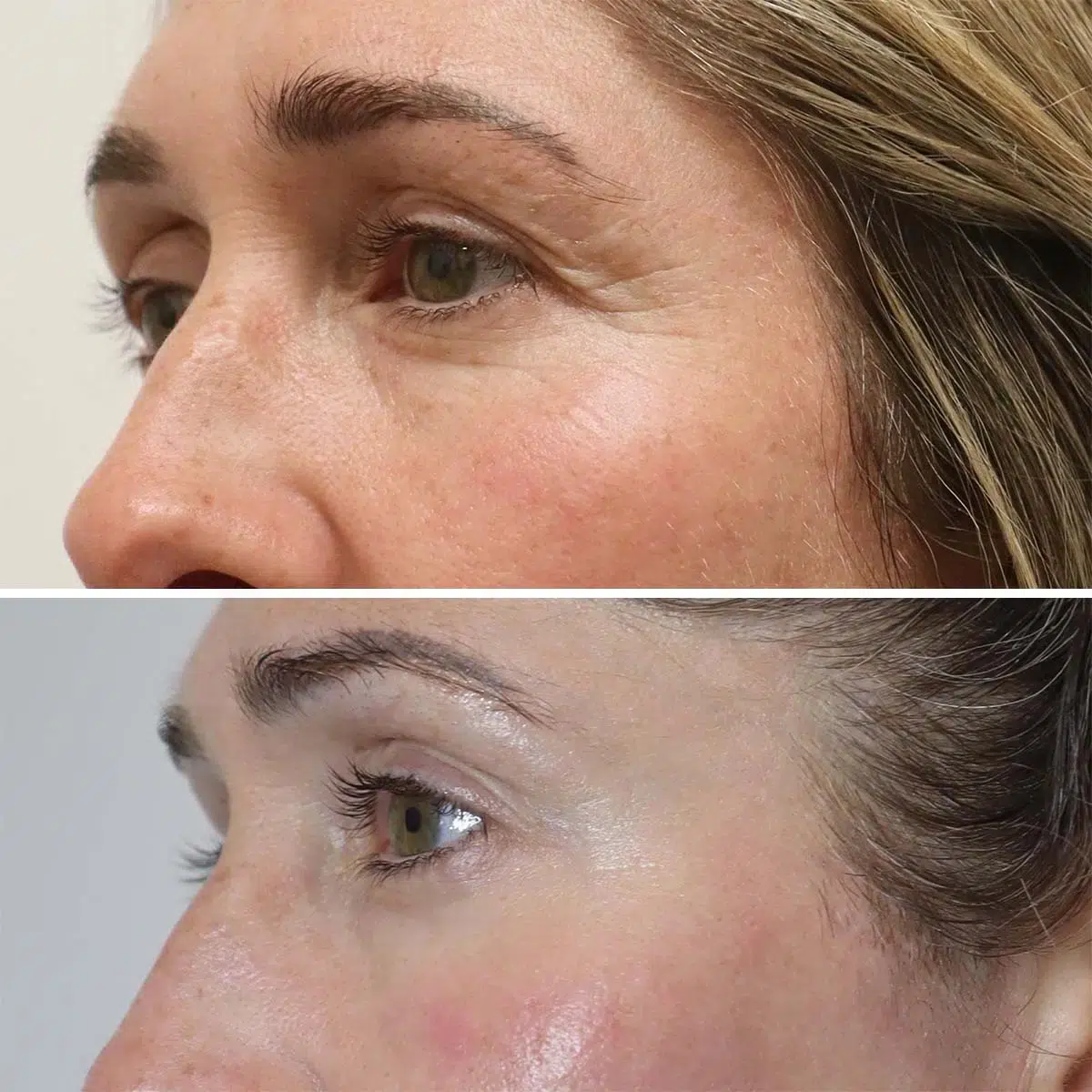 BeforeAfter
What our clients say


Curious about what is possible for your skin?
Start with an intake. Then we can see what your skin needs and which approach suits your eye area.